
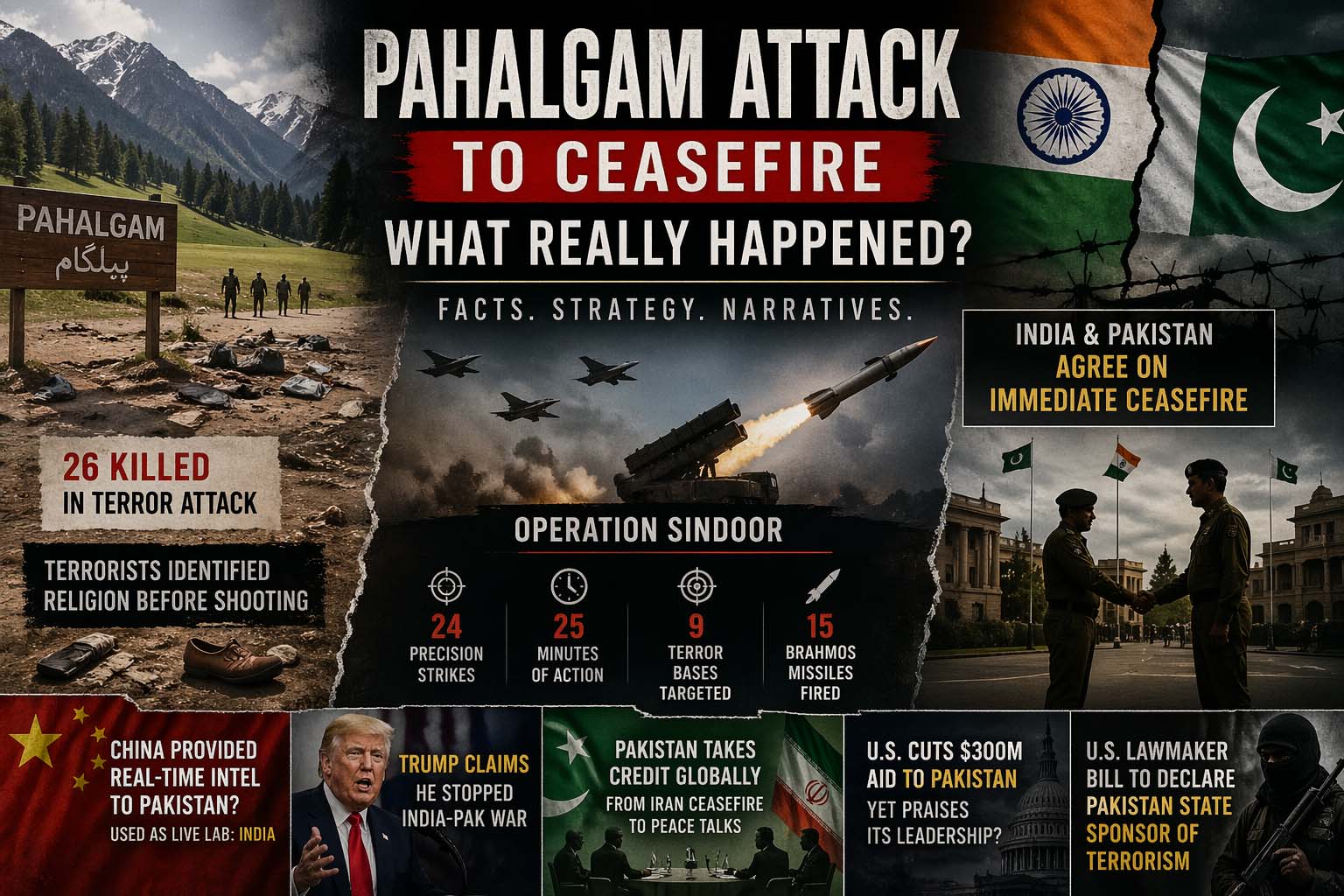
Pahalgam Attack, Operation Sindoor & Ceasefire: What Really Happened?
Introduction: Why the Pahalgam Attack Matters
The Pahalgam Terror Attack (April 2025) marked a major escalation in the Kashmir conflict and reshaped the trajectory of the India–Pakistan relationship
What followed—military retaliation, cross-border escalation, and global political narratives—demonstrates how modern conflicts are driven by both military power and information warfare.
Pahalgam Terror Attack 2025: What Happened?
On April 22, 2025, militants attacked tourists in Pahalgam, Jammu & Kashmir, killing 26 civilians.
Key Facts
- Victims reportedly identified by religion before being shot
- Attack carried political messaging targeting India’s leadership
- Included newly married civilians among the victims
According to reports from NDTV and India Today, this was one of the deadliest civilian attacks in the region in recent years.
Operation Sindoor: India’s Military Response
India launched Operation Sindoor in response, targeting militant infrastructure across the border.
Key Highlights
- 24 precision strikes in 25 minutes
- 9 terror camps targeted
- Use of advanced missile systems including BrahMos missile technology
- Significant militant casualties claimed (disputed)
This operation marked a strategic shift in India’s counter-terror response policy.
India Pakistan Conflict 2025: Escalation Phase
Following Operation Sindoor, tensions escalated between India and Pakistan, leading to:
- Drone warfare and missile exchanges
- Heavy cross-border shelling
- Civilian casualties along the Line of Control
To understand the historical context, read: History of India–Pakistan Relations.
India Pakistan Ceasefire 2025: How It Happened
On May 10, 2025, both nations agreed to a ceasefire following military-level discussions.
Ceasefire Details
- Conducted via DGMO-level talks
- No official third-party mediation (India’s position)
- Immediate halt to hostilities
However, global narratives around the ceasefire varied significantly.
Global Narrative War: Who Took Credit?
Statements by global leaders, including Donald Trump, suggested external mediation, which India officially denied.
Meanwhile, Pakistan gained visibility through its diplomatic engagements in other global conflicts, including Iran-related negotiations.
China’s Alleged Role in the Conflict
India claimed that China provided intelligence support to Pakistan during the conflict.
Status of Claims
- No independent verification
- No official confirmation from China
- Remains a strategic allegation
For broader geopolitical context, see: Global Terrorism & Strategic Alliances.
India vs Pakistan: Strategic Comparison
| Factor | India | Pakistan |
|---|---|---|
| Approach | Military retaliation | Diplomatic positioning |
| Mediation | Avoids third-party involvement | Acts as mediator |
| Global Visibility | Lower narrative projection | Higher diplomatic exposure |
| Focus | Security & sovereignty | Geopolitical leverage |
Why India Didn’t Get Global Credit
1. Bilateral Strategy
India prefers direct engagement rather than third-party mediation, limiting global visibility.
2. Pakistan’s Diplomatic Role
Pakistan’s involvement in mediation efforts increases its international recognition.
3. Narrative Gap
India focuses on operational outcomes, while Pakistan leverages diplomatic storytelling.
US Policy vs Political Messaging
The United States has shown mixed signals:
- Cut financial aid citing militancy concerns
- Maintained diplomatic engagement with Pakistan
Read more from: Al Jazeera and The Guardian.
Conclusion: A War Beyond the Battlefield
The Pahalgam attack and its aftermath demonstrate that modern conflicts operate across three layers:
- Military action
- Strategic alliances
- Global narrative control
Ultimately, winning the narrative can shape global perception as much as military success.
References
About the Author
Ahsan writes about technology, global news, and digital trends. His articles focus on simplifying complex topics and helping readers understand important global developments.
Comments (0)
No comments yet. Be the first to comment.
Related Posts
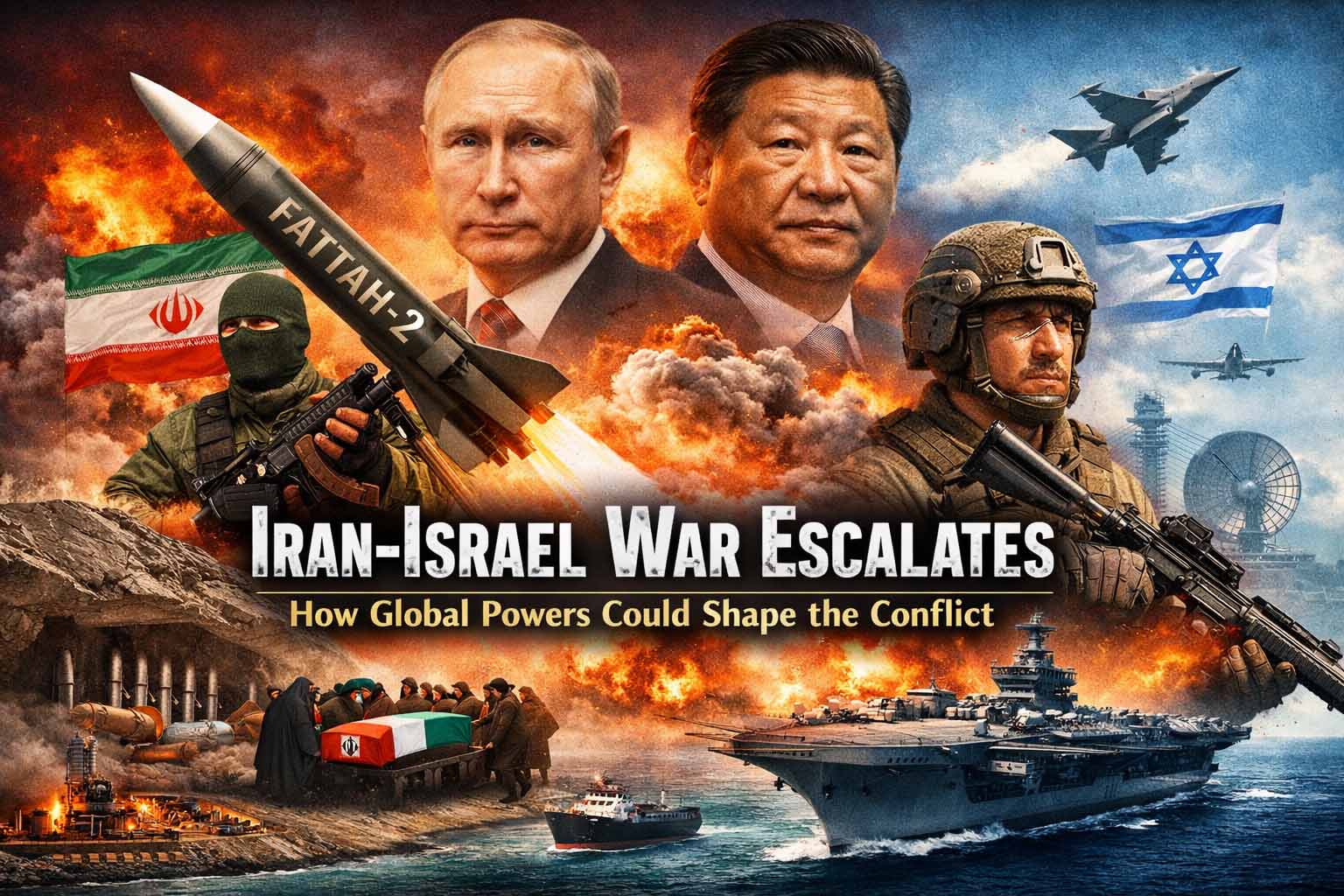
Middle East conflict escalation map
A deep analysis of the Iran–Israel war, exploring military escalation, global power involvement, oil market risks, and the possibility of a wider geopolitical conflict.

The Education Business
Over the past decade, a new industry has emerged at the intersection of technology and learning: EdTech (Education Technology).
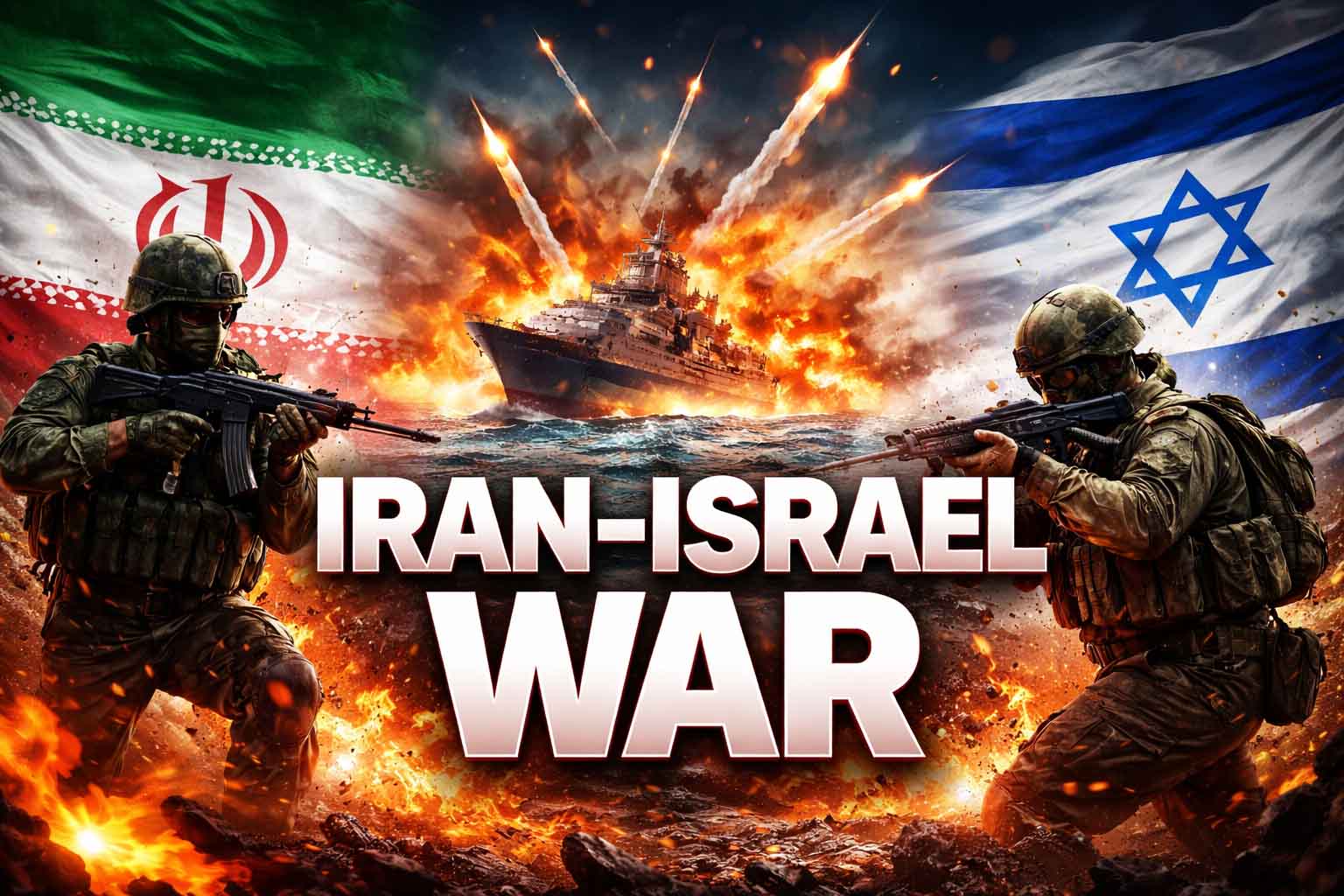
Iran–Israel War 2026 Update: Missile Strikes, Iranian Navy Ship Sinking & Global Power Politics
Latest Iran–Israel war update (March 2026): Iranian missile strikes on Israel, the sinking of the Iranian warship IRIS Dena, and the geopolitical tensions involving the US, Israel, and India.