
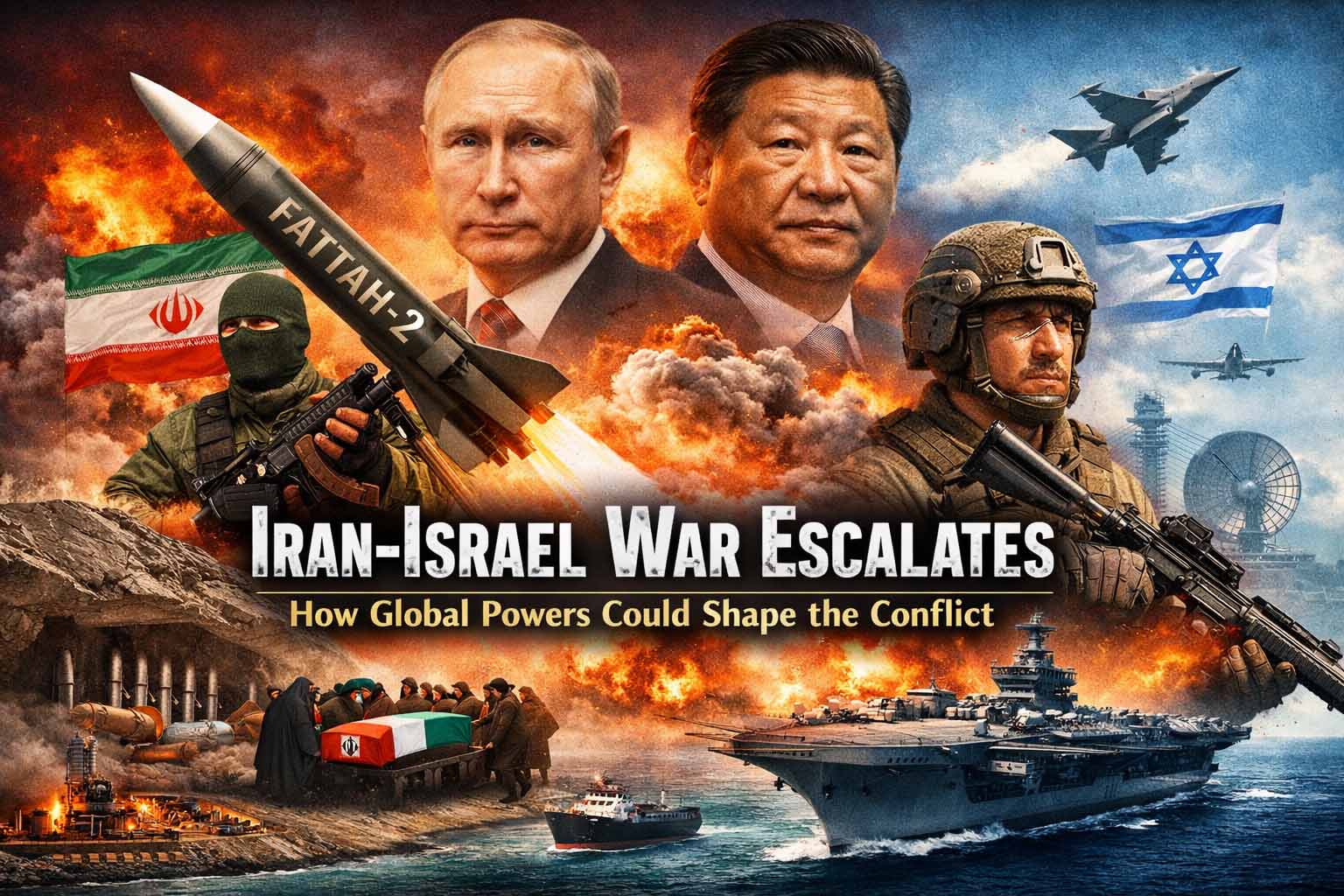
Middle East conflict escalation map
Iran–Israel War Escalates: A Geopolitical Turning Point in the Middle East
The recent escalation between Iran and Israel has quickly evolved into one of the most dangerous geopolitical crises in the Middle East in years. What began as a series of retaliatory strikes has now transformed into a multi‑layered confrontation involving advanced missiles, airstrikes, intelligence warfare, and global political maneuvering.
Although the conflict is geographically centered in the Middle East, its implications stretch far beyond the region. The involvement of major global powers such as the United States, Russia, and China raises serious questions about whether this war could reshape the global geopolitical balance.
Over the last 24 hours alone, the intensity of the conflict has dramatically increased. Reports of large‑scale airstrikes, missile launches, and rising civilian casualties suggest that the war is entering a new and potentially more dangerous phase.
Understanding Iran’s Strategic Approach
Military analysts believe Iran’s strategy may not be focused on achieving a traditional military victory. Instead, it appears to follow a concept often described as “victory denial.”
This approach acknowledges the imbalance of power between Iran and the combined military capabilities of Israel and the United States. Rather than attempting to win outright, Iran’s goal may be to prevent its opponents from achieving decisive dominance.
By prolonging the conflict, Iran could increase the political, economic, and military costs for its adversaries. Long wars often create domestic political pressure and financial strain, especially for nations involved in overseas military operations.
Iran’s leadership has hinted that maintaining the duration of the conflict is part of its broader strategy.
Massive Airstrikes and Missile Exchanges
In the past 24 hours, reports indicate that more than 80 Israeli fighter jets carried out coordinated strikes targeting underground facilities believed to contain Iranian missile storage and strategic infrastructure.
These strikes reportedly involved hundreds of precision weapons aimed at disabling Iran’s military capabilities. Underground cave systems believed to store critical resources were among the main targets.
Iran’s Islamic Revolutionary Guard Corps (IRGC) responded with overnight missile strikes directed at Israeli positions.
Casualty figures remain difficult to confirm. However, some international media reports suggest the number of deaths in Iran could exceed one thousand people following the strikes. In Israel, the casualty numbers appear significantly lower.
For updated coverage see: https://www.aljazeera.com
Iran’s Phase Two Strategy
Iranian military sources claim that the first phase of their response strategy has already concluded. The country is now believed to be entering Phase Two of its military operations.
This phase reportedly includes the use of newer missile technologies, including the Fattah‑2 hypersonic missile. Hypersonic weapons travel at extremely high speeds and are designed to evade many existing air defense systems.
If confirmed, the deployment of such advanced systems could significantly increase the technological complexity of the conflict.
The United States and Strategic Military Pressure
The United States has responded by increasing its military presence in the region. Reports suggest Washington has deployed additional naval forces, including a third aircraft carrier strike group.
Aircraft carriers represent one of the most powerful instruments of U.S. military projection. Their presence sends a strong strategic signal that the United States is prepared to defend its allies and protect regional stability.
Statements from American political leaders have also indicated a willingness to escalate military action if Iran continues its attacks.
Saudi Arabia’s Concern About Economic Stability
Regional powers are deeply worried about the broader consequences of the war. According to reports by Bloomberg, Saudi Arabia has attempted to communicate with Iran in order to reduce tensions and encourage diplomatic solutions.
Source: https://www.bloomberg.com
The reason for this concern is clear: a prolonged conflict in the Middle East could severely disrupt global energy markets and international trade routes.
Russia’s Strategic Calculations
Russia appears to be watching the situation carefully. Some geopolitical analysts believe the conflict may indirectly benefit Moscow.
If the war disrupts oil exports from the Gulf region, global oil prices could rise sharply. In such a scenario, Russia—one of the world’s largest energy exporters—would benefit economically.
Additionally, if the United States becomes heavily focused on the Middle East conflict, attention and resources dedicated to Ukraine could decline.
Reports discussed by PBS also suggest the possibility of intelligence sharing that may help Iran improve missile targeting strategies.
Source: https://www.pbs.org
China’s Quiet Strategic Position
China’s approach to the conflict has been more subtle but equally significant.
Beijing has major economic investments in Iran’s energy infrastructure and maintains strong trade relationships with the region. China also dominates the global supply of several critical minerals used in advanced electronics and radar systems.
If military infrastructure in the region requires rebuilding, supply chains controlled by China could become extremely important.
China has historically followed a strategy often described as “hide your strength and bide your time,” allowing it to maintain influence without direct military involvement.
The Importance of the Strait of Hormuz
One of the most dangerous potential developments in this conflict would be disruption in the Strait of Hormuz.
This narrow maritime passage is responsible for transporting roughly twenty percent of the world’s oil supply. Any attempt to block or threaten this shipping route could trigger a major global energy crisis.
Such an event would not only affect oil prices but could also destabilize financial markets and international trade.
The Possibility of a Wider Conflict
Although the war currently remains limited to regional actors, the presence of multiple global powers increases the risk of escalation.
Modern conflicts rarely remain isolated when strategic alliances, economic interests, and military partnerships are involved.
If diplomatic channels fail and the conflict continues to intensify, the Middle East could become the center of a broader geopolitical confrontation.
Conclusion
The Iran–Israel conflict is no longer simply a regional dispute. It has evolved into a complex geopolitical struggle involving global powers, economic interests, and strategic military calculations.
While the immediate focus remains on missile strikes and military operations, the true significance of the conflict lies in its global implications.
Energy markets, international alliances, and global security structures may all be affected depending on how the conflict unfolds.
The coming weeks will likely determine whether diplomacy can prevent further escalation—or whether the world is witnessing the early stages of a much larger geopolitical transformation.
About the Author
Ahsan writes about technology, global news, and digital trends. His articles focus on simplifying complex topics and helping readers understand important global developments.
Comments (0)
No comments yet. Be the first to comment.
Related Posts

The Education Business
Over the past decade, a new industry has emerged at the intersection of technology and learning: EdTech (Education Technology).
Iran–Israel War 2026 Update: Missile Strikes, Iranian Navy Ship Sinking & Global Power Politics
Latest Iran–Israel war update (March 2026): Iranian missile strikes on Israel, the sinking of the Iranian warship IRIS Dena, and the geopolitical tensions involving the US, Israel, and India.
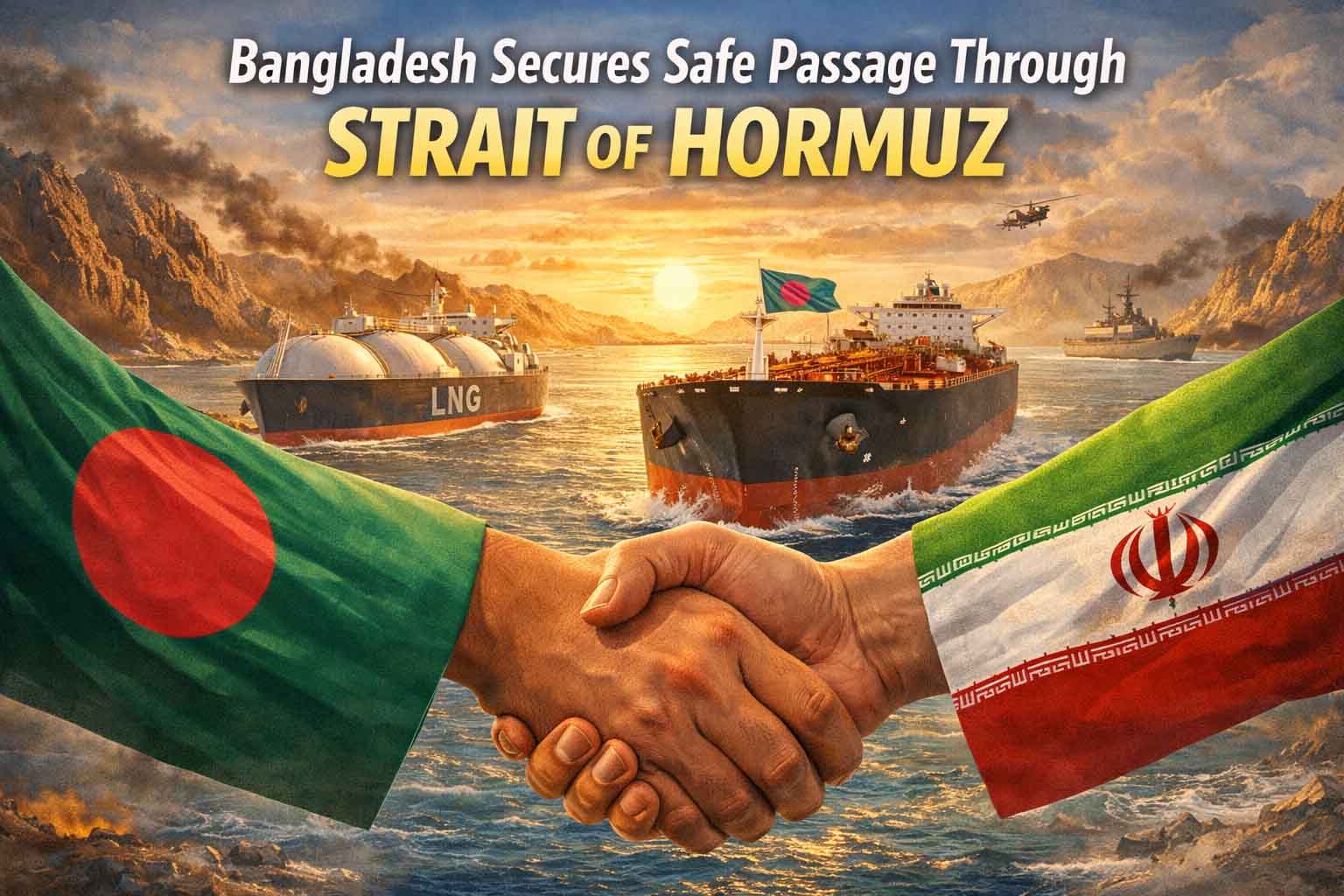
Bangladesh Secures Safe Passage Through Strait of Hormuz
Bangladesh receives rare safe passage for oil and LNG tankers through the Strait of Hormuz amid the US-Israel-Iran conflict, helping secure the country's fuel supply.