
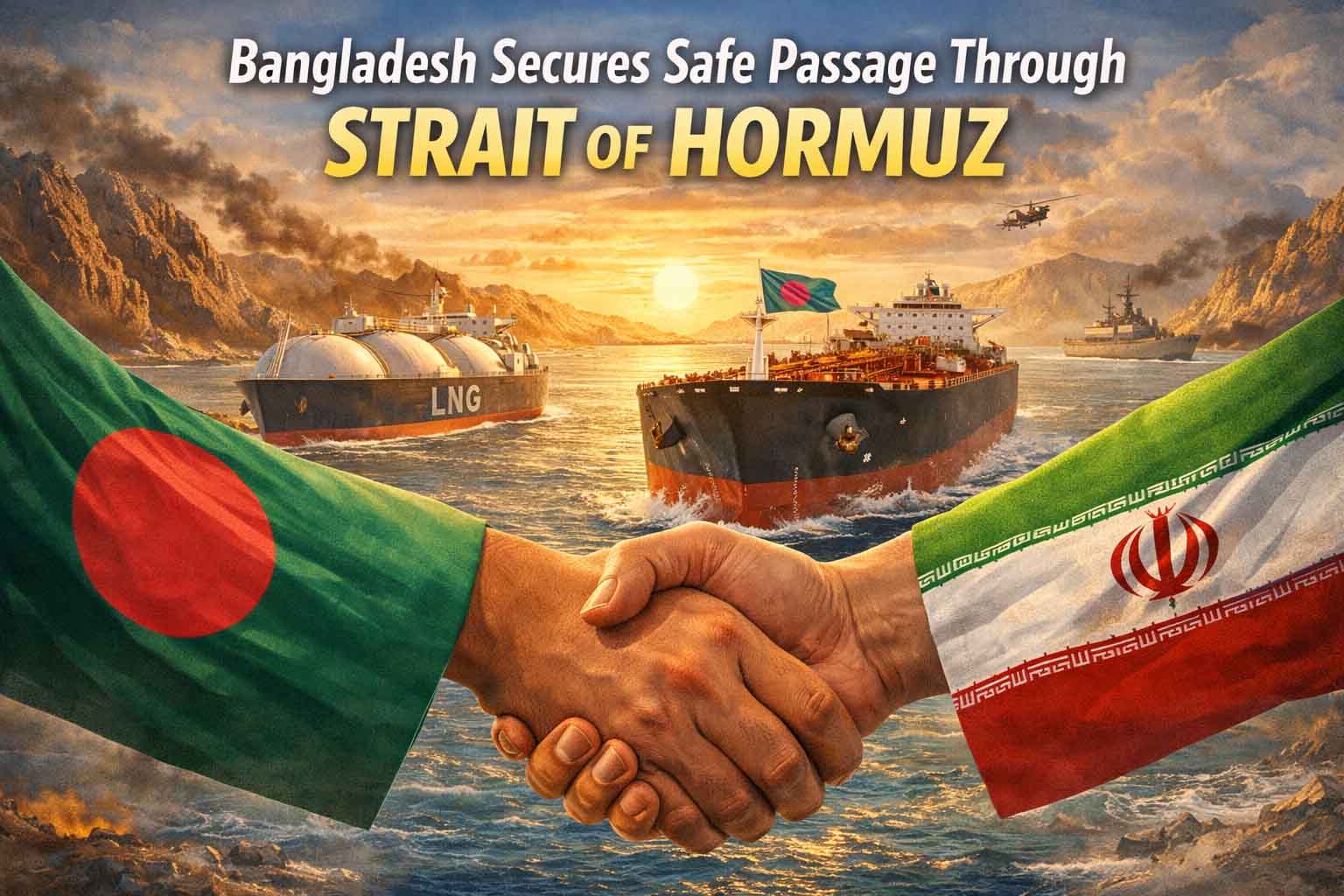
Bangladesh Secures Safe Passage Through Strait of Hormuz
In a major geopolitical development, Bangladesh has secured rare safe passage for its oil and LNG tankers through the Strait of Hormuz, one of the world’s most critical energy chokepoints. The agreement comes amid escalating tensions in the Middle East involving the United States, Israel, and Iran, which have significantly disrupted global oil shipping routes.
With most international vessels facing restrictions in the strategic waterway, Iran has granted Bangladesh an exemption allowing Bangladeshi fuel shipments to pass through safely, providing a critical lifeline for the country's energy supply.
This development highlights the growing diplomatic engagement between Bangladesh and Iran while also emphasizing the strategic importance of the Strait of Hormuz for global energy markets.
Why the Strait of Hormuz Is Critical for Global Oil Supply
The Strait of Hormuz is one of the most important maritime routes for energy transportation in the world.
Key Facts About the Strait of Hormuz
Nearly 20% of the world's oil supply passes through this route.
Approximately 14 million barrels of crude oil and 6 million barrels of refined petroleum products transit the strait daily during normal conditions.
It connects the Persian Gulf with the Arabian Sea and global markets.
Because of this, any disruption in the Strait quickly impacts global oil prices, shipping logistics, and energy security.
Recent geopolitical tensions have drastically reduced shipping traffic in the area, causing significant concerns for energy-importing countries like Bangladesh.
Source: Traffic through Hormuz remains minimal | Latest Market News
Bangladesh–Iran Talks Lead to Safe Transit Agreement
The breakthrough came after direct diplomatic talks between Bangladesh and Iran.
Key Meeting Details
Bangladesh Energy Adviser Iqbal Hasan Mahmud Tuku met with Iran’s Ambassador to Bangladesh Jalil Rahimi Jahanabadi in Dhaka.
The meeting resulted in Iran allowing Bangladeshi oil and LNG vessels to transit the Strait of Hormuz safely.
However, Iran requires that:
Bangladeshi ships notify Iranian authorities in advance
Ships must identify themselves before entering the strait
This precaution ensures Iranian military forces do not mistakenly target the vessels during heightened tensions.
Reference: Iran to allow safe passage for Bangladeshi ships through Strait of Hormuz: Report
Bangladesh’s Fuel Shipments Continue Despite Hormuz Crisis
The agreement has already begun stabilizing Bangladesh’s fuel imports.
Recent Fuel Shipment Updates
27,000 tonnes of diesel have already arrived at Chattogram Port.
Four additional fuel tankers are currently on the way to Bangladesh.
The government is also preparing to import 300,000 tonnes of additional diesel to ensure energy security.
Bangladesh imports approximately 6.2 million tonnes of petroleum products every year, making uninterrupted access to maritime energy routes essential for the country’s economy.
Reference: Iran agrees to provide safe passage to Bangladeshi oil and LNG vessels
Iran’s Selective Blockade Strategy
Iran’s current strategy appears to be selective maritime control rather than a complete shutdown.
Countries Restricted
Iran has restricted shipping linked to:
United States
Israel
European allies
Countries Receiving Limited Access
Some countries, including:
Bangladesh
China (in negotiation)
have received limited or conditional passage permissions.
This selective policy allows Iran to maintain political pressure while keeping certain diplomatic channels open.
Reference: China in talks with Iran to allow safe oil and gas passage through Hormuz, sources say | Reuters
Impact on Global Oil Prices and Energy Markets
The Strait of Hormuz crisis has already affected global energy markets.
Major Effects
Rising global oil prices
Increased shipping insurance costs
Disrupted global LNG supply chains
Strategic energy planning by importing nations
Many oil tankers have been forced to anchor offshore or reroute via longer routes such as the Cape of Good Hope, increasing transportation costs and delivery times.
For energy-dependent nations like Bangladesh, maintaining access to the strait is essential to avoid fuel shortages and economic disruption.
Social Media Reaction in Bangladesh
Following news of the agreement, Bangladeshi social media platforms have been filled with appreciation toward Iran.
Many users describe the decision as a sign of growing diplomatic friendship and cooperation between Bangladesh and Iran, especially during a period of global geopolitical tension.
While public sentiment varies, the overall reaction reflects relief that the country’s fuel supply chain remains stable.
What This Means for Bangladesh’s Energy Security
The safe transit agreement represents a major diplomatic success for Bangladesh.
Key Benefits
Ensures continuous fuel imports
Reduces risk of energy shortages
Stabilizes domestic fuel supply
Strengthens strategic diplomatic ties
In a global energy crisis, securing access to one of the world's most important oil routes demonstrates Bangladesh’s growing ability to navigate complex geopolitical challenges.
Conclusion
The Bangladesh-Iran safe passage agreement through the Strait of Hormuz highlights how diplomacy can safeguard national interests even during global conflicts.
As geopolitical tensions reshape international shipping routes and energy markets, Bangladesh’s ability to maintain fuel imports ensures stability for its economy and energy infrastructure.
While the situation in the Middle East remains volatile, this agreement has provided Bangladesh with a temporary but vital lifeline in the global energy storm.
FAQ
Why is the Strait of Hormuz important for global oil supply?
The Strait of Hormuz is one of the most critical oil shipping routes in the world. Nearly 20% of global petroleum and liquefied natural gas (LNG) exports pass through this narrow waterway every day, connecting the oil-rich Persian Gulf to international markets. Any disruption in the strait can quickly impact global fuel prices and energy supply chains.
Why did Iran allow Bangladesh tankers to pass through the Strait of Hormuz?
Iran granted Bangladesh special transit permission after diplomatic discussions between Bangladesh’s Energy Adviser Iqbal Hasan Mahmud Tuku and Iran’s ambassador Jalil Rahimi Jahanabadi. The agreement allows Bangladeshi oil and LNG tankers to pass safely through the strait as long as vessels notify Iranian authorities in advance before entering the waterway.
How does the Strait of Hormuz crisis affect Bangladesh?
Bangladesh relies heavily on imported fuel transported through the Strait of Hormuz. Any blockade or shipping disruption could cause fuel shortages, rising energy prices, and economic pressure. The safe passage agreement helps Bangladesh maintain stable fuel imports and protect its energy security during the ongoing regional tensions.
About the Author
Ahsan writes about technology, global news, and digital trends. His articles focus on simplifying complex topics and helping readers understand important global developments.
Comments (0)
No comments yet. Be the first to comment.
Related Posts
Middle East conflict escalation map
A deep analysis of the Iran–Israel war, exploring military escalation, global power involvement, oil market risks, and the possibility of a wider geopolitical conflict.

The Education Business
Over the past decade, a new industry has emerged at the intersection of technology and learning: EdTech (Education Technology).
Iran–Israel War 2026 Update: Missile Strikes, Iranian Navy Ship Sinking & Global Power Politics
Latest Iran–Israel war update (March 2026): Iranian missile strikes on Israel, the sinking of the Iranian warship IRIS Dena, and the geopolitical tensions involving the US, Israel, and India.